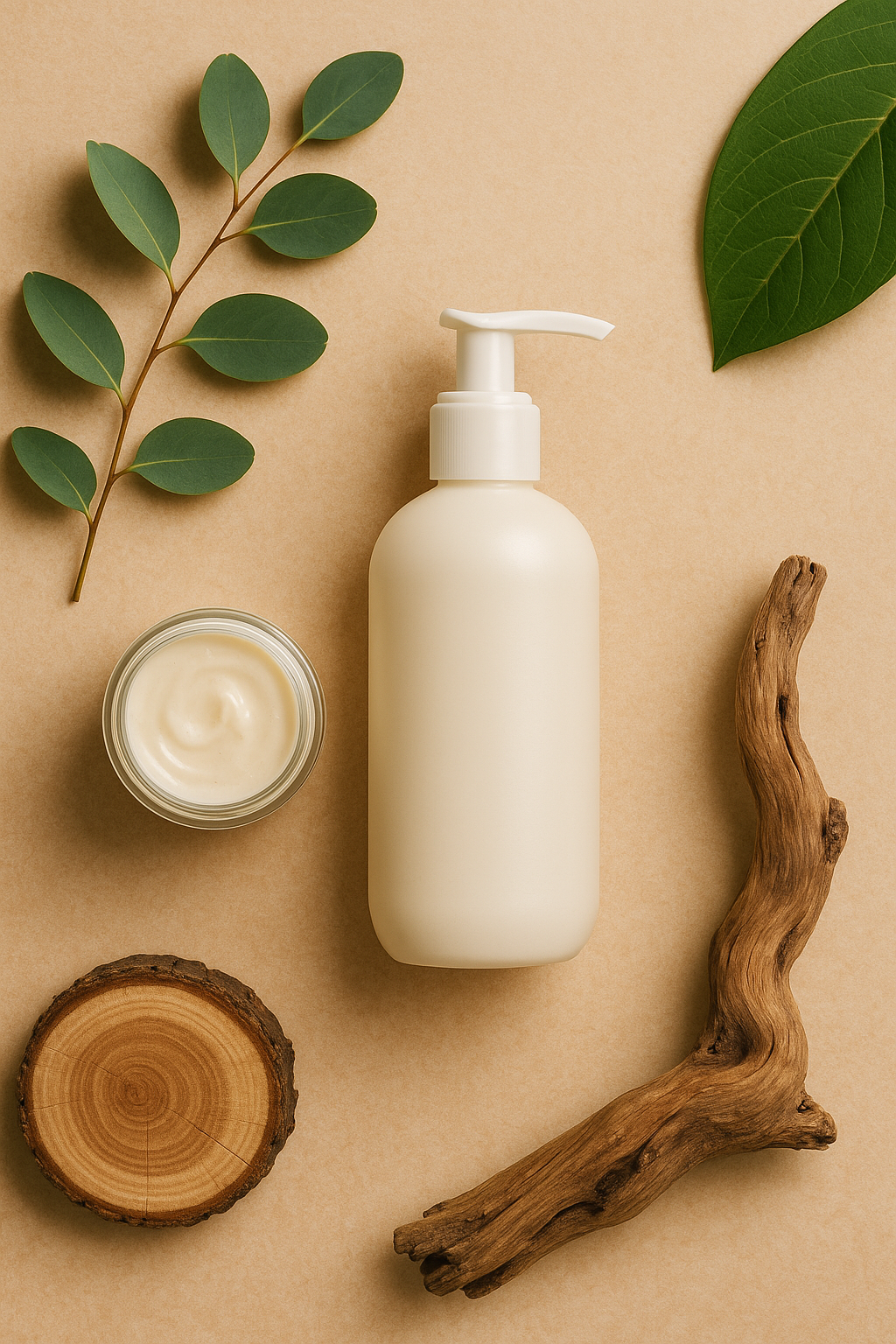
Replace your regular lotion with a natural one — your skin (and the planet) will thank you.
Change comes one step at a time. It doesn’t have to be dramatic — in fact, some of the most meaningful and rewarding journeys begin with the smallest steps.
Through my own life experience, I’m often surprised by how deeply impactful certain moments have been — moments that started with quiet, consistent actions. At the time, I didn’t expect them to lead anywhere significant, and yet they took me further than I ever imagined.
Today, I’m thinking about how the journey toward healthier living — for ourselves, our families, and our planet — might begin with just one simple change. Something as small as switching to a natural lotion can make a difference.
Why start with our skin? Because it’s our body’s largest organ, and according to a study by Bronaugh & Maibach (1985), it absorbs up to 64% of the substances it touches. Areas like the face and underarms absorb even more.
So what can we do? Make one simple switch: replace your regular body lotion with a natural alternative. We’re lucky to have many options today — look for ingredients like shea butter, jojoba oil, and essential oils. These help avoid exposure to parabens, phthalates, and synthetic fragrances, many of which are known endocrine disruptors.
This kind of small, thoughtful change can lead to a lasting habit. When we start with something achievable, it gives us a psychological boost — a sense of success that builds motivation over time (Fogg, 2020).
And from there, the ripple effect begins:
- Environmental: Natural products are usually biodegradable and sustainably made.
- Social: Many eco-brands support fair trade and small producers.
- Emotional: Using something safe, ethical, and nurturing adds to your well-being (Ryan & Deci, 2001).
As I continue this journey, I’m learning alongside you. I’ve become more aware of how much our everyday choices shape our lives — and how learning and being mindful naturally lead to better decisions.
📚 References
- Ryan, R. M., & Deci, E. L. (2000). Self-determination theory and the facilitation of intrinsic motivation, social development, and well-being. American Psychologist, 55(1), 68–78. https://pubmed.ncbi.nlm.nih.gov/11392867/
- Bronaugh, R. L., & Maibach, H. I. (1985). Percutaneous absorption of drugs and cosmetics. American Journal of Public Health, 75(1), 34–37. https://pubmed.ncbi.nlm.nih.gov/4078703/
- Darbre, P. D. (2006). Environmental oestrogens, cosmetics and breast cancer. Best Practice & Research Clinical Endocrinology & Metabolism, 20(1), 121–143. https://pubmed.ncbi.nlm.nih.gov/16522524/
- Fogg, B. J. (2020). Tiny Habits: The Small Changes That Change Everything. Boston: Houghton Mifflin Harcourt. https://www.amazon.com/Tiny-Habits-Changes-Change-Everything/dp/0358003326